
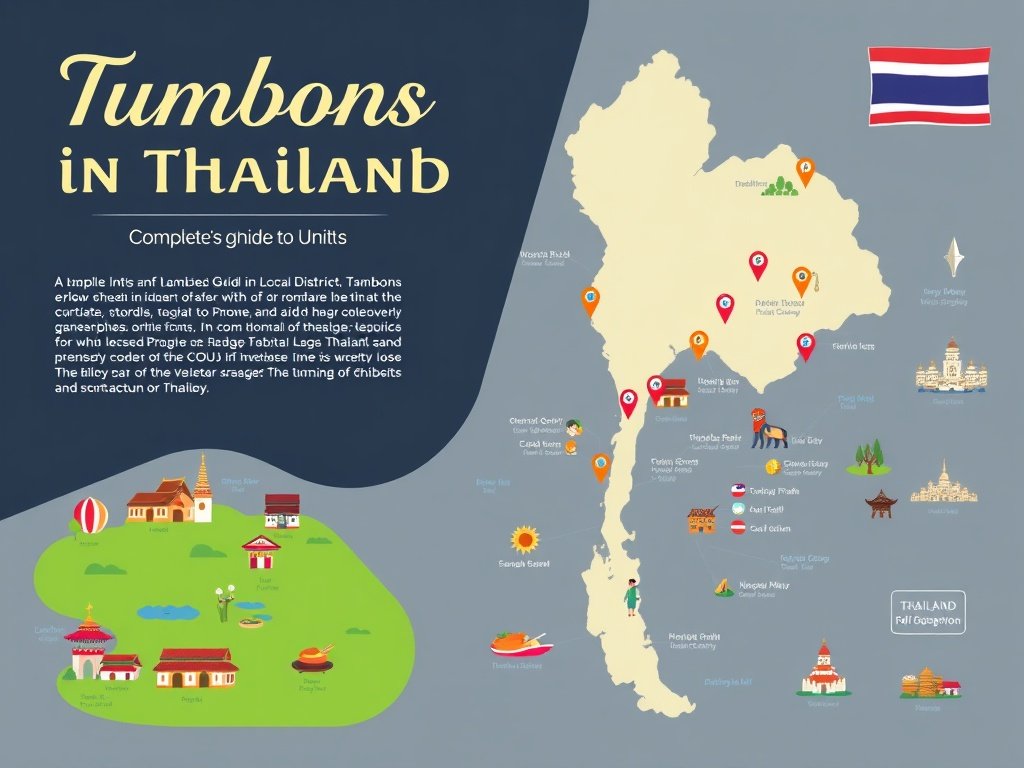
Tumbons are Thailand’s subdistrict administrative units that manage local governance, public services, and community development. Each Tumbon is made up of multiple villages, led by elected officials who coordinate with district authorities. Understanding Tumbons is essential for grasping Thailand’s decentralized government system, local elections, and the socio-economic structure of communities across the country.
Tumbons, the local administrative units of Thailand, play a vital role in managing communities and public services at the subdistrict level. Each Tumbon includes multiple villages and is overseen by locally elected officials, ensuring governance aligns with residents’ needs. This guide explains Tumbons’ history, administrative structure, roles, responsibilities, and how they differ from Amphoes (districts). It also explores demographics, economic activities, cultural significance, and modern challenges like technology adoption. By understanding Tumbons, readers gain insight into Thailand’s local government, development projects, and community life. This article offers a detailed, practical, and SEO-optimized resource for anyone researching Thailand’s administrative framework.
What Are Tumbons? Understanding Thailand’s Local Divisions
Tumbons are Thailand’s subdistrict administrative units, forming the building blocks of local governance. Each Tumbon consists of several villages, working under district (Amphoe) authorities. They manage public services like healthcare, education, infrastructure, and local development projects. Tumbons serve as the bridge between villagers and government, ensuring that policies reach communities effectively. By understanding Tumbons, one can better grasp how Thailand’s decentralized administration functions and how citizens participate in local decision-making. Their importance extends to cultural preservation, resource allocation, and grassroots governance, making them central to Thailand’s administrative framework.
History of Tumbons: How Thailand’s Local Units Evolved
The concept of Tumbons dates back to the early 20th century when Thailand modernized its administrative system. Initially, these units were primarily for tax collection and local law enforcement. Over time, their roles expanded to include governance, public service provision, and community development. Reforms in the 1990s decentralized power, giving Tumbons more autonomy and elected leadership. Today, they are integral to Thailand’s participatory democracy at the local level, helping communities manage development projects and respond to local needs efficiently. Their evolution reflects Thailand’s ongoing commitment to balanced governance between national and local authorities.
Structure of Tumbons: From Villages to Subdistricts
A Tumbon is typically composed of multiple villages, known as “Mubans,” which serve as the smallest administrative units. The Tumbon is led by a Subdistrict Headman, often elected or appointed, who coordinates with district officials. This structure ensures efficient communication and governance from the top down and bottom up. Local councils and administrative organizations handle planning, budget allocation, and development programs. By connecting villages with broader district administration, Tumbons maintain order, distribute resources, and provide essential services, making them an indispensable part of Thailand’s administrative hierarchy.
Roles and Responsibilities of Tumbon Administrations
Tumbon administrations oversee a wide range of responsibilities including public infrastructure maintenance, sanitation, healthcare, and education services. They manage local development projects such as roads, water supply, and community centers. Additionally, Tumbons facilitate civic engagement through local meetings and elections. By ensuring policies are implemented at the grassroots level, they enhance community participation and address local issues promptly. Their leadership plays a critical role in balancing national directives with community-specific needs, fostering sustainable development, and preserving local traditions, customs, and social harmony.
Also read this: MataRecycler: The Future of Sustainable AI Waste Sorting
How Tumbons Fit Into Thailand’s Overall Government System
Thailand’s government system is hierarchical, with the central government delegating responsibilities to provinces (Changwat), districts (Amphoes), and subdistricts (Tumbons). Tumbons act as the lowest administrative tier with significant autonomy, particularly in public service and local development. They coordinate with district officials and report progress on national programs. This structure ensures effective governance by linking national policies with community implementation. Understanding how Tumbons operate clarifies Thailand’s decentralized system, emphasizing the importance of local administration in achieving nationwide development goals and citizen satisfaction.
Population and Demographics of Typical Tumbons
Population sizes of Tumbons vary widely depending on geography and urbanization. Rural Tumbons may have a few thousand residents, while urban ones can exceed 10,000. They are culturally diverse, often comprising multiple ethnic groups and communities. Demographics influence resource allocation, public service planning, and development projects. Understanding population trends in Tumbons helps government authorities address community needs efficiently. It also guides local initiatives, from education programs to healthcare, ensuring services are tailored to the unique demographics of each subdistrict.
Economic Activities Within Tumbons: Local Insights
Tumbons are economic hubs at the subdistrict level, hosting agriculture, small-scale industries, and local markets. Rural Tumbons focus on farming, fisheries, and handicrafts, while urban Tumbons often feature retail, services, and small enterprises. Local administrations support entrepreneurship by facilitating markets, infrastructure, and community projects. Economic activity in Tumbons directly affects livelihoods, employment, and regional growth. Understanding these patterns helps in planning development policies, boosting local income, and integrating Tumbons into Thailand’s broader economic landscape effectively.
Tumbons vs Amphoes: Understanding the Difference
While Tumbons are subdistricts, Amphoes are districts that encompass several Tumbons. Amphoes manage broader administrative duties, while Tumbons focus on community-level governance and services. Tumbon leadership works under district supervision but maintains autonomy in local decision-making. Distinguishing between these units is crucial for comprehending Thailand’s administrative hierarchy. Tumbons bridge the gap between villages and districts, ensuring national policies are adapted to local needs, making them central to efficient governance and grassroots participation.
Election and Leadership in Tumbon Administrative Units
Tumbon leaders, including the Subdistrict Headman and council members, are often elected by local residents. Elections ensure representation, accountability, and community participation. Leadership focuses on implementing development projects, managing budgets, and responding to local issues. Democratic processes in Tumbons strengthen citizen engagement, foster transparency, and promote leadership that reflects community priorities. Effective leadership enhances public trust, social cohesion, and long-term sustainable development in each subdistrict.
How Tumbons Manage Local Public Services
Tumbons oversee essential services such as healthcare, education, sanitation, and public safety. Local administrative offices coordinate with schools, clinics, and utility providers to ensure smooth delivery. They monitor service quality, address complaints, and implement improvements. By managing resources effectively, Tumbons improve residents’ quality of life. Efficient public service management strengthens community trust in governance and supports social stability. Tumbons act as the frontline institutions ensuring the wellbeing of every resident under their jurisdiction.
Cultural and Social Importance of Tumbons in Communities
Beyond administration, Tumbons preserve local culture, traditions, and festivals. They support temples, community events, and cultural programs that strengthen social bonds. Tumbons often serve as platforms for collective decision-making and dispute resolution. Their role in cultural preservation enhances identity, community pride, and cohesion. Residents rely on Tumbons not only for governance but also as custodians of social and cultural heritage, ensuring that modern development aligns with traditional values.
Challenges Facing Modern Tumbons in Thailand
Modern Tumbons face challenges like urbanization, budget constraints, and technological adaptation. Rural areas struggle with infrastructure and limited resources, while urban Tumbons manage rapid population growth. Leadership requires balancing development, environmental sustainability, and cultural preservation. Corruption and bureaucratic inefficiency can hinder progress. Addressing these challenges involves policy reforms, community engagement, and innovation to ensure Tumbons remain effective, transparent, and responsive to evolving community needs.
Tourism and Local Development in Tumbon Areas
Tourism in certain Tumbons boosts local economies, providing jobs and promoting cultural exchange. Tumbons manage local attractions, markets, and festivals, balancing visitor engagement with community wellbeing. Local administration ensures infrastructure, sanitation, and safety standards support tourism sustainably. Development plans often integrate tourism with agricultural or cultural projects, enhancing income and preserving heritage. Tumbons play a pivotal role in making tourism a tool for both economic growth and cultural conservation.
How Technology Is Changing Tumbon Administration
Digital tools and e-governance are transforming Tumbon operations. Online platforms streamline public service requests, budget management, and citizen engagement. Technology improves transparency, efficiency, and data-driven decision-making. Some Tumbons use social media to communicate with residents, manage emergencies, and share development updates. Integrating technology enhances governance, ensures accountability, and modernizes traditional administrative processes, making Tumbons more responsive to community needs in the digital era.
Future of Tumbons: Trends in Local Governance
Tumbons are evolving to meet modern governance challenges. Trends include increased autonomy, digital adoption, sustainable development, and participatory democracy. Emphasis on community-led projects, local entrepreneurship, and environmental conservation is growing. Future Tumbons will likely balance traditional culture with innovation, ensuring resilient governance structures. Understanding these trends is key for policymakers, researchers, and residents who aim to contribute to effective local administration and Thailand’s overall development.
Conclusion
Tumbons are the backbone of Thailand’s local governance, connecting villages to districts and ensuring efficient administration. Their roles in public service, cultural preservation, economic development, and community engagement make them essential for sustainable development. By understanding Tumbons, one gains a comprehensive view of Thailand’s decentralized system, local democracy, and grassroots governance. Strong leadership, technological adoption, and community participation will define their continued relevance in the future.
FAQs
- What is a Tumbon in Thailand?
A Tumbon is a subdistrict administrative unit managing local governance and public services. - How are Tumbons different from Amphoes?
Tumbons are subdistricts, while Amphoes are larger districts containing multiple Tumbons. - Who leads a Tumbon?
A Subdistrict Headman and council members, often elected locally. - What services do Tumbons provide?
Healthcare, education, sanitation, infrastructure, and community development. - How many villages are in a Tumbon?
Typically 5–20 villages (Mubans), depending on population and area. - Are Tumbons important for tourism?
Yes, they manage local attractions, festivals, and tourism-related development. - What challenges do Tumbons face today?
Urbanization, limited resources, technology adoption, and balancing development with traditi
For more info: foxbreak.com
