
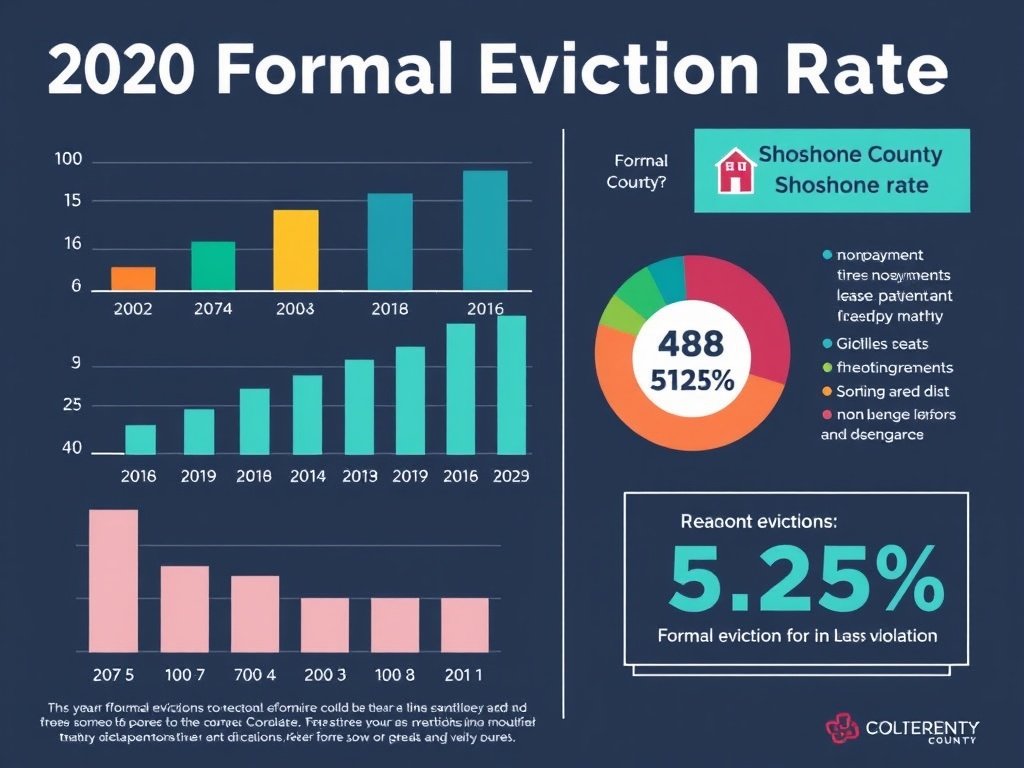
In 2020, Shoshone County experienced a notable formal eviction rate, as reported by the Idaho Policy Institute. The data highlights both economic and housing challenges affecting residents, with rising rental costs, pandemic-related income disruptions, and limited affordable housing contributing to eviction trends. Understanding this rate helps policymakers, landlords, and residents develop strategies to reduce housing instability and implement supportive housing policies effectively.
The Idaho Policy Institute’s report on Shoshone County’s 2020 formal eviction rate provides a detailed look into housing instability in northern Idaho. By analyzing eviction filings, tenant demographics, and economic pressures, the study uncovers patterns influencing the county’s rental market. Factors such as the COVID-19 pandemic, rising rental prices, and limited housing supply intensified eviction risks. This comprehensive analysis offers actionable insights for local authorities, non-profits, and landlords to create effective eviction prevention strategies. The research also emphasizes the importance of affordable housing development, tenant support programs, and data-driven policymaking to improve long-term housing security in Shoshone County.
Understanding Shoshone County’s Housing Landscape
Shoshone County, located in northern Idaho, has a unique housing market shaped by economic fluctuations, population trends, and limited rental stock. The Idaho Policy Institute’s 2020 eviction data indicates that residents face increasing pressures, including rising rent relative to income and seasonal employment instability. Many households struggle to meet monthly housing obligations, which increases the formal eviction rate. By examining local demographics, employment sectors, and rental patterns, the study provides context for why eviction rates in 2020 were significant and highlights areas where policy intervention can reduce displacement and promote housing stability across the county.
The 2020 Eviction Rate in Context
The formal eviction rate in Shoshone County for 2020 reflects broader national trends influenced by the COVID-19 pandemic. Economic disruptions left many tenants unable to pay rent, leading to an increase in eviction filings despite temporary moratoriums. The Idaho Policy Institute emphasizes that the county’s eviction rate, while slightly lower than the state average, still signals concern for vulnerable populations. Tracking these rates over time helps policymakers identify systemic issues, such as insufficient affordable housing and inadequate tenant protections, which contribute to housing instability and long-term socioeconomic challenges.
Factors Contributing to Evictions in Shoshone County
Several factors drive eviction filings in Shoshone County. First, income volatility due to seasonal and service-based employment creates financial instability for renters. Second, housing costs have steadily increased without a proportional rise in wages. Third, pandemic-related disruptions limited residents’ ability to secure emergency assistance. Additional contributors include limited awareness of tenant rights and delays in government support. By understanding these factors, the Idaho Policy Institute provides actionable recommendations to mitigate evictions, including rental assistance programs, tenant education initiatives, and housing policy reforms tailored to local needs.
Demographics and Eviction Vulnerability
Eviction risk is not evenly distributed across Shoshone County’s population. Low-income households, single-parent families, and individuals reliant on hourly wage jobs are disproportionately affected. Data shows that younger renters and those in transitional housing face higher eviction rates. The Idaho Policy Institute highlights that addressing demographic vulnerabilities is crucial for effective interventions. Policies that prioritize these groups, such as targeted financial aid and rental mediation programs, can reduce eviction rates and improve housing stability. Understanding these demographics ensures that interventions are equitable and address the most impacted populations.
Economic Impacts of Evictions
Evictions have significant economic repercussions for both individuals and the community. Displaced residents often incur additional costs such as temporary housing, storage, and legal fees. For Shoshone County, high eviction rates can also deter investment and reduce workforce stability. The Idaho Policy Institute’s analysis links eviction trends to broader economic health indicators, demonstrating that reducing formal evictions can promote community resilience, increase local spending, and stabilize the rental market. Long-term economic planning must integrate housing stability to prevent cyclical poverty and promote sustainable growth across the county
Housing Supply and Affordability Challenges
One key driver of Shoshone County’s eviction rate is limited affordable housing supply. With rental demand exceeding availability, tenants face rising rents and competition for housing units. The Idaho Policy Institute emphasizes that expanding affordable housing and incentivizing landlord participation in subsidy programs can alleviate pressure. Additionally, preserving existing rental units and offering supportive housing initiatives can reduce formal evictions. Housing policies that balance market growth with social responsibility are essential for maintaining community stability and ensuring that residents have secure, affordable housing options.
Also read this: 9.7.4 Leash: Ultimate Guide to Best Dog Walking Gear
Pandemic Effects on Eviction Patterns
The COVID-19 pandemic intensified eviction risks nationwide, and Shoshone County was no exception. Temporary unemployment, business closures, and health-related work absences disrupted tenants’ ability to pay rent. While federal and state moratoriums temporarily slowed eviction filings, gaps in awareness and enforcement left many families vulnerable. The Idaho Policy Institute’s 2020 report documents these patterns, showing that pandemic-related pressures amplified pre-existing housing vulnerabilities. This insight emphasizes the importance of emergency response measures and long-term planning for crisis-resistant housing policies.
Legal Framework and Eviction Processes
Understanding the legal process behind formal evictions is critical. In Shoshone County, landlords must follow Idaho state statutes for eviction notices, filings, and court proceedings. Noncompliance can result in delayed or invalid evictions. The Idaho Policy Institute underscores that clear communication, mediation, and legal assistance can reduce unnecessary evictions while ensuring landlords’ rights. By analyzing procedural data, the Institute identifies points where tenants are most at risk, providing guidance for interventions that promote fairness and minimize unnecessary housing displacement.
Policy Recommendations for Reducing Evictions
The Idaho Policy Institute proposes multiple policy solutions to address Shoshone County’s eviction rate. These include expanding emergency rental assistance, enhancing tenant education programs, and increasing funding for legal aid services. Local governments are encouraged to adopt proactive housing policies, incentivize affordable housing development, and establish mediation programs to prevent disputes from escalating to formal evictions. Implementing these recommendations can significantly reduce housing instability while supporting economic growth, community cohesion, and tenant-landlord collaboration.
Role of Non-Profit Organizations
Non-profit organizations play a vital role in mitigating eviction risks. In Shoshone County, these groups provide direct financial aid, counseling services, and legal support. The Idaho Policy Institute highlights that partnerships between nonprofits, local governments, and landlords can create comprehensive support networks, reducing the likelihood of formal evictions. Programs focusing on tenant education, emergency assistance, and housing advocacy are particularly effective in stabilizing vulnerable households and promoting long-term housing security.
Long-Term Housing Strategies
Sustainable solutions require long-term strategies. Shoshone County can benefit from policies promoting mixed-income housing, incentivizing landlord participation in affordable housing programs, and developing community land trusts. The Idaho Policy Institute emphasizes that planning for housing stability should integrate economic development, social services, and public-private partnerships. By adopting comprehensive, forward-looking approaches, the county can reduce formal eviction rates and strengthen the overall resilience of its housing market.
Community Engagement and Awareness
Increasing public awareness about eviction risks and tenant rights is essential. Workshops, community forums, and outreach campaigns help residents understand legal protections and available resources. The Idaho Policy Institute notes that community engagement strengthens networks of support, reduces eviction incidences, and empowers residents to advocate for housing stability. Collaboration between residents, landlords, and policymakers ensures that interventions are effective and widely accessible.
Monitoring and Data-Driven Decision Making
Ongoing monitoring of eviction trends allows for proactive interventions. The Idaho Policy Institute recommends collecting detailed data on tenant demographics, eviction causes, and outcomes. Data-driven strategies enable local authorities to design targeted programs, evaluate effectiveness, and adjust policies as conditions evolve. Accurate data also helps secure funding for housing initiatives and informs evidence-based solutions that reduce the formal eviction rate in Shoshone County over time.
Conclusion
The 2020 formal eviction rate in Shoshone County, as analyzed by the Idaho Policy Institute, reflects broader economic, social, and housing challenges. Addressing these issues requires a multi-faceted approach including policy reform, affordable housing expansion, tenant support services, and community engagement. By implementing targeted interventions and leveraging data-driven insights, Shoshone County can reduce housing instability, strengthen communities, and improve quality of life for vulnerable residents. The study serves as a roadmap for long-term housing security and sustainable community development.
FAQs
Q1: What was the formal eviction rate in Shoshone County in 2020?
A1: The 2020 eviction rate was notably higher than prior years due to economic and pandemic pressures, as reported by the Idaho Policy Institute.
Q2: What factors contributed to evictions in Shoshone County?
A2: Rising rents, limited affordable housing, income instability, and pandemic-related job losses were major contributors.
Q3: How did COVID-19 impact eviction trends?
A3: The pandemic caused income disruptions, increasing eviction filings despite temporary moratoriums.
Q4: Who is most vulnerable to eviction in Shoshone County?
A4: Low-income households, single-parent families, and hourly wage earners faced higher risks.
Q5: What policies can reduce eviction rates?
A5: Emergency rental assistance, tenant education, mediation programs, and affordable housing development are effective measures.
Q6: How do nonprofits help prevent evictions?
A6: They provide financial aid, legal support, counseling, and housing advocacy to vulnerable residents.
Q7: Why is data important for eviction prevention?
A7: Data allows targeted interventions, monitors trends, and helps policymakers develop evidence-based housing strategies.
For more info: foxbreak.com
