





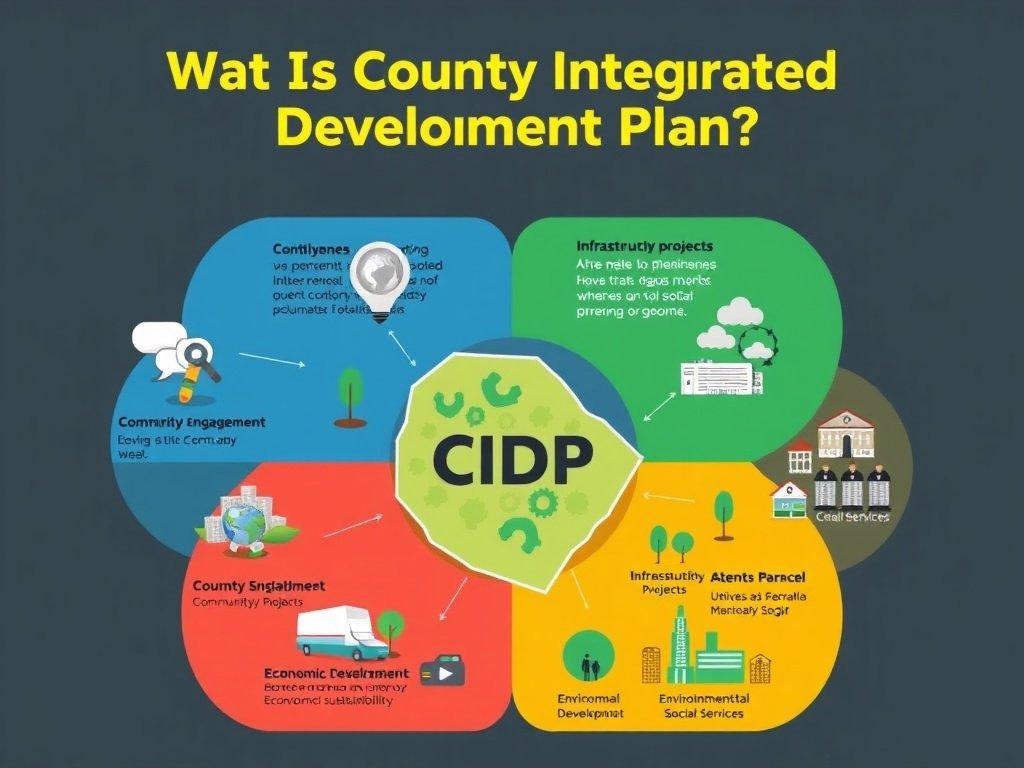
A county integrated development plan is a five-year strategic blueprint that guides a county’s development priorities, budgeting, and implementation of public projects. It aligns local needs with national policies, ensuring coordinated planning in sectors like health, infrastructure, education, and economic growth. The plan promotes transparency, public participation, and efficient resource allocation for sustainable regional development.
Understanding what is county integrated development plan is essential for anyone interested in public governance and regional growth. This comprehensive guide explains how counties design long-term development strategies, allocate budgets, and prioritize community needs. You will discover how integrated planning connects infrastructure, health, agriculture, and economic expansion under one coordinated framework.
We also explore legal foundations, citizen participation, monitoring systems, and implementation challenges. Whether you are a student, policymaker, entrepreneur, or engaged citizen, this article provides clear, practical insight into how county governments shape sustainable development and improve public service delivery through structured planning.
Understanding the Meaning and Core Purpose of County Integrated Development Planning
To truly grasp what is county integrated development plan, you must see it as more than a document. It is a strategic framework that defines a county’s long-term vision and development priorities. This plan coordinates social, economic, and infrastructure goals into one unified roadmap. Instead of scattered projects, it ensures structured progress. Counties use it to align public spending with real community needs while promoting transparency, accountability, and sustainable growth across sectors that directly affect citizens’ daily lives.
Legal Foundation and Governance Framework Behind County Development Strategies
A county integrated development plan is grounded in constitutional and legislative frameworks that mandate decentralized planning. National laws often require counties to prepare five-year plans before budgeting public funds. This legal structure strengthens local governance and ensures development decisions follow standardized procedures. It protects public resources from misuse while encouraging institutional accountability. By anchoring development planning in law, counties create consistency in policy implementation and promote equitable distribution of public services across urban and rural regions.
How Integrated Planning Aligns County Vision With National Development Goals
Integrated planning bridges local aspirations with national economic blueprints. Counties must ensure their development priorities align with broader government strategies such as economic growth plans or infrastructure expansion policies. This coordination avoids duplication of projects and strengthens synergy between different government levels. When local roads, hospitals, and agricultural programs reflect national objectives, development becomes more coherent. Alignment also increases funding opportunities because national authorities are more likely to support projects that complement wider policy frameworks.
Key Components That Form the Structure of a Development Blueprint
A county development blueprint contains several structured elements that guide implementation. It begins with a situational analysis examining population trends, economic conditions, and infrastructure gaps. This is followed by strategic objectives that outline measurable goals for sectors like health, education, and transport. Financial planning sections detail projected revenues and expenditure priorities. Monitoring and evaluation mechanisms track performance throughout the plan’s lifecycle. Together, these components create a comprehensive system that turns vision statements into actionable development outcomes.
The Role of Public Participation in Shaping County Priorities
Community involvement sits at the heart of integrated development planning. Public forums, stakeholder consultations, and citizen surveys help identify pressing needs. When residents voice concerns about water supply, roads, or healthcare facilities, planners integrate those priorities into the strategy. This participatory approach increases transparency and builds trust between citizens and government institutions. It also improves project relevance because decisions reflect lived experiences rather than assumptions. Ultimately, public engagement transforms planning from a bureaucratic exercise into a democratic process.
Sectoral Integration Across Health, Education, Infrastructure, and Agriculture
Integrated development planning avoids silo thinking. Instead of treating health, education, infrastructure, and agriculture as isolated sectors, it connects them strategically. For example, building rural roads improves market access for farmers while also enhancing school attendance and emergency medical response. This cross-sector coordination maximizes resource efficiency and long-term impact. Counties prioritize balanced growth so that investment in one sector supports progress in others. Such integration ensures sustainable development that addresses interconnected social and economic challenges.
Budgeting and Resource Allocation Within the Planning Framework
Financial planning is a critical pillar of the development blueprint. Counties must estimate projected revenues from local taxes, national transfers, and donor funding. These funds are then allocated according to priority programs identified in the plan. Clear budgeting prevents impulsive spending and ensures funds serve strategic objectives. Transparent allocation processes also reduce corruption risks. By linking budgets directly to development goals, counties promote fiscal discipline and ensure taxpayers’ money contributes to tangible improvements in public services.
Monitoring, Evaluation, and Performance Tracking Mechanisms
Implementation without monitoring is like sailing without a compass. Counties establish performance indicators to measure progress across sectors. Regular evaluation reports assess whether projects meet timelines, budgets, and expected outcomes. Adjustments are made when goals fall behind schedule. Monitoring frameworks enhance accountability because leaders must demonstrate measurable results. They also provide data for future planning cycles. Continuous evaluation ensures development remains responsive to emerging needs and changing economic realities within the county.
Also read this: Axelanote Productivity App: Master Your Tasks With Smart Organization Tools
Economic Growth and Investment Promotion Through Strategic Planning
Integrated development planning plays a crucial role in stimulating local economies. By identifying investment opportunities in agriculture, tourism, manufacturing, and trade, counties attract private sector participation. Infrastructure improvements such as roads and energy access further boost business confidence. Strategic zoning and land use policies guide sustainable urban expansion. Economic diversification reduces unemployment and enhances revenue generation. A well-designed development plan therefore becomes a catalyst for long-term prosperity and resilience in both rural and urban communities.
Infrastructure Development and Service Delivery Improvements
Infrastructure projects form a visible outcome of structured planning. Counties prioritize construction of roads, water systems, hospitals, and schools based on identified needs. These investments enhance service delivery efficiency and improve quality of life. Better infrastructure also reduces regional inequality by connecting remote communities to economic centers. Careful sequencing of projects ensures resources are not overstretched. By focusing on sustainable infrastructure, counties lay foundations for inclusive growth and stronger public institutions.
Environmental Sustainability and Climate Resilience in County Planning
Modern development planning integrates environmental protection and climate adaptation strategies. Counties assess ecological risks such as flooding, drought, and land degradation before implementing projects. Green infrastructure solutions promote renewable energy, waste management, and conservation initiatives. Sustainable land use planning balances urban expansion with ecosystem preservation. By embedding environmental safeguards into development strategies, counties protect natural resources while promoting economic advancement. Climate resilience measures ensure communities remain secure against future environmental shocks.
Challenges Counties Face During Implementation and Execution
Despite clear frameworks, counties encounter obstacles during implementation. Limited funding can delay infrastructure projects and reduce service coverage. Political transitions sometimes disrupt continuity of strategic priorities. Capacity gaps in technical expertise may hinder effective monitoring. Community expectations can exceed available resources. Addressing these challenges requires institutional strengthening, transparent leadership, and improved financial management systems. Recognizing potential obstacles allows counties to adopt proactive solutions that safeguard development progress.
Transparency, Accountability, and Anti-Corruption Measures
Accountability mechanisms ensure that public resources achieve intended outcomes. Transparent procurement processes reduce opportunities for misuse of funds. Public reporting platforms allow citizens to track project progress and expenditures. Independent oversight institutions enhance governance credibility. Strong accountability systems build investor confidence and strengthen public trust. When counties demonstrate responsible financial stewardship, development initiatives gain legitimacy and long-term sustainability.
Long-Term Impact on Social Welfare and Community Wellbeing
The broader objective of integrated planning is improved social welfare. Enhanced healthcare access reduces mortality rates while better education systems increase literacy and employment prospects. Infrastructure investments stimulate trade and reduce poverty. Social protection programs support vulnerable populations. Over time, coordinated planning transforms living standards and strengthens community resilience. The impact extends beyond physical projects to improved governance culture and citizen empowerment.
Conclusion: Why Strategic County Planning Shapes Sustainable Development
Understanding what is county integrated development plan reveals its transformative role in governance and regional growth. It is a structured strategy that aligns vision, budgeting, participation, and accountability into one coherent framework. By integrating sectors and promoting transparency, counties ensure sustainable development outcomes. Effective implementation improves public services, stimulates economic growth, and enhances social wellbeing. In essence, strategic planning becomes the backbone of responsible county governance and long-term prosperity.
FAQs (People Also Ask)
1. What is the main purpose of a county integrated development plan?
Its main purpose is to guide a county’s development priorities, budgeting, and project implementation over a fixed planning period, usually five years.
2. How long does a county integrated development plan last?
Most plans cover a five-year cycle aligned with government terms and budgeting frameworks.
3. Who prepares the county integrated development plan?
County government officials prepare it in consultation with stakeholders, experts, and local residents.
4. Why is public participation important in development planning?
Public participation ensures projects reflect real community needs and enhances transparency and accountability.
5. How does the plan influence budgeting decisions?
Budgets are derived from the priorities identified in the plan, ensuring funds align with strategic goals.
6. What sectors are covered in the development plan?
It typically covers health, education, infrastructure, agriculture, environment, trade, and social services.
7. Can the plan be revised during implementation?
Yes, periodic reviews allow adjustments based on performance evaluations and emerging community needs.
Fore more info: Foxbreak.com


